
Few leaders in the print industry bring the same blend of experience, strategic vision, and quiet determination as Ken Ingram. Now in his seventh year as president of SCREEN Americas, Ingram has helped transform the company’s presence in North America by sharpening its focus on high-performance inkjet solutions. From record-setting sales of the Truepress Jet520 Series to the relocation of the company’s headquarters to Elk Grove Village, Illinois, his leadership has marked a period of significant growth and innovation.
With over 35 years in the graphic arts, Ingram has remained committed to SCREEN’s core values—quality, reliability, and a distinctly human approach to business rooted in the Japanese principle of Sampo Yoshi: mutual benefit for seller, buyer, and society. In this Q&A, he shares insights into SCREEN’s purpose, the evolution of inkjet, and what it takes to quietly do the job exceptionally well every day.
How would you define SCREEN’s core purpose and guiding philosophy today?
We take our lead from our parent company, which has a history in Japan going back to late 1800s. In short, SCREEN is committed to being a positive force for society and business. They reference a Japanese concept called “Sampo Yoshi”, which translates to “Three-Dimensional Satisfaction”. When a business transaction provides benefits to all stakeholders—the buyer, the seller, and society—Sampo Yoshi is achieved. In the Americas, we’ve adopted that same principle and try to add to it as an approach and a culture that fits our people, our values and our customers. That approach is printed in our front lobby: “Quietly doing whatever it takes to get the job done exceptionally well every day.”
With a portfolio that spans commercial print, labels, packaging, and more, what sets SCREEN apart in such a competitive and evolving inkjet landscape?
What sets us apart is our commitment to and focus on production class solutions. That can be a disadvantage at times—our tool set may be limited compared to the competition. But the advantage for us is when a company needs to build solutions for their customers that require the uptime, low cost of ownership, repeatability, and reliability of true production, then we’re built for that.
How does innovation play into your product development strategy, and what recent advances are you most excited about?
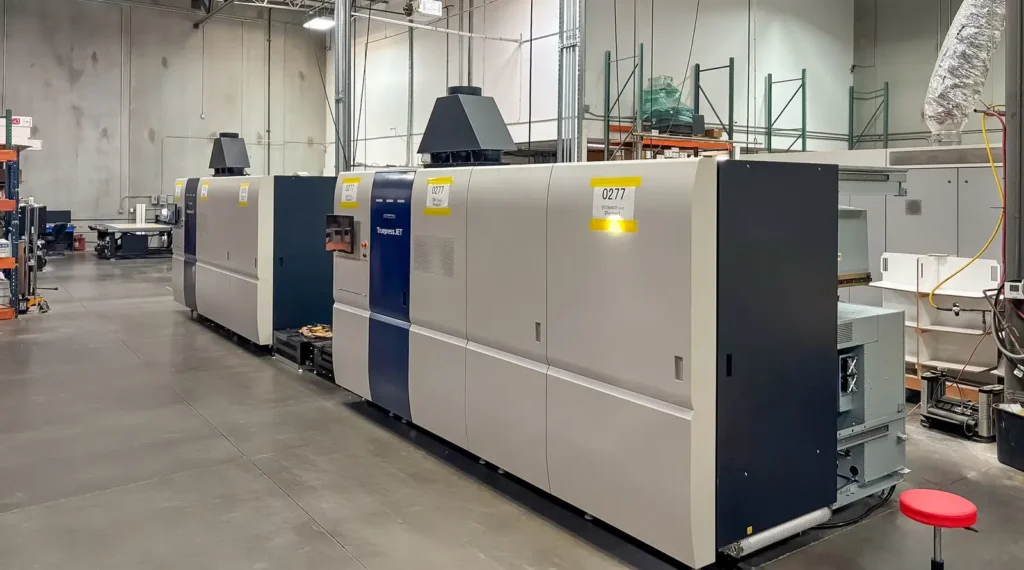
Intelligent automation is what will continue to drive the offset conversion and growth in the kind of programmatic work we see fueling our customer’s growth. Every innovation we see coming out of Japan is focused on eliminating touches, waste and inefficiencies in the print production process to lower the total cost of print.
How do you view your role in shaping the future of the inkjet industry and supporting your customers through change?
The most simple and straightforward way to express our role is to facilitate more and more print on our solutions so that everyone wins.
What trends or challenges do you believe will most impact the growth and evolution of inkjet printing—and how is SCREEN preparing for that future?
We think labor challenges will be a big factor in our business going forward. SCREEN has answered and met the challenge of offset quality in production class inkjet printing and we can show customers that when all costs are accounted for, our solutions provide the lowest total cost of ownership. Now the technical challenge will be to make that possible with less and less labor and fewer physical touches. From moving white paper to finishing final print product, companies like SCREEN will need to innovate at every step in the workflow. Not to get too much into product, but we see the impact of that approach quite clearly in our new Truepress Jet 560HDX and we expect SCREEN to continue innovating well into the future.